


If you need light and fresh shoes to work, then I recommend S1 safety shoes.
In this article I will answer the most frequently asked questions about S1 safety footwear, so you can find the perfect product for your needs!
Contents
When should S1 safety shoes be used?
- If you work outdoors and you need to keep your feet fresh, but there is no risk of liquid splashes.
- If you work indoors, for instance in a warehouse, where the risk of liquid splashes is low, and you need good breathability.
What standards do S1 safety shoes comply with?
S1 safety shoes comply with the UNI EN ISO 20345 = shoes equipped with toecaps, which protect the wearer from impacts and crushing, with resistance to energies up to 200J and to pressure loads of at least 15kN.
S1 safety shoes have all the basic properties of SB shoes (base safety), plus:
- Closed heel region
- Antistatic
- Shock-absorption in the heel area
- Resistance to the contact with hydrocarbon
What other properties can S1 safety footwear have?
S1 safety shoes can also have additional properties (mostly required in specific sectors), along with the corresponding marking. The most frequent ones are:
- CI = “Cold Insulation”
- ESD = “Electrostatic Discharge”. ESD shoes are not designed to protect the wearer, rather the electrical equipment sensitive to electrostatic discharges
- HI = “Heat Insulation” (in the outsole)
- HRO = the outsoles can withstand the contact with very hot surfaces
[consiglio_esperto]
What models of safety shoes should I choose?
S1 Safety footwear, chosen for you by SafetyShoesToday

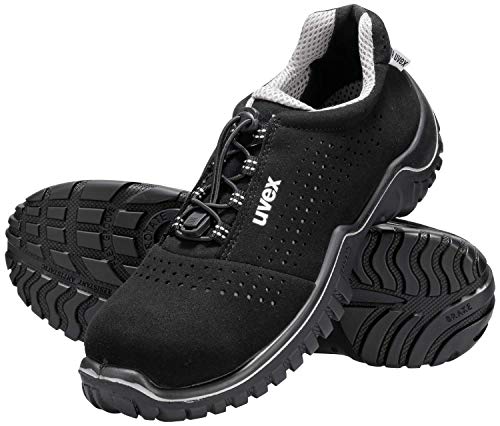


Those tips will help you to find the perfect type of S1 safety footwear for your needs.
As soon as you choose your perfect pair of S1 safety footwear, you will experience better comfort and protection at work.
What do you think of S1 Safety Shoes?
Do you have anything to add?
Leave us a comment below!


