


If you are looking for breathable, light and pierce-proof footwear to wear at work, then I recommend S1P safety shoes.
In this article I will answer the most frequently asked questions about S1P safety footwear, to help you find the perfect product for you needs!
Contents
In what cases should S1P shoes be used?
- If you work outdoors and there is no risk of liquid splashes
- If you work indoors, for example in a warehouse, and the risk of liquid splashes is low
- You need breathable safety footwear
- You need pierce-proof soles
What standards do S1P safety footwear comply with?
S1P safety shoes comply with the UNI EN ISO 20345 = shoes equipped with toecaps, which protect the wearer from impacts and crushing, with resistance to energies up to 200J and to pressure loads of at least 15kN.
S1P safety shoes have all the basic properties of SB shoes (base safety), plus:
- Closed heel region
- Antistatic
- Shock-absorption in the heel area
- Resistance to the contact with hydrocarbon
- Pierce-proof plates in the soles (they have the “P” marking)
What other properties can S1P shoes have?
S1P safety shoes can also have additional properties (mostly required in specific sectors), along with the corresponding marking. The most frequent ones are:
- CI = “Cold Insulation”
- ESD = “Electrostatic Discharge”. ESD shoes are not designed to protect the wearer, rather the electrical equipment sensitive to electrostatic discharges
- HI = “Heat Insulation” (in the outsole)
- HRO = the outsoles can withstand the contact with very hot surfaces
[consiglio_esperto]
What models of S1P safety footwear should I choose?
These are the products I suggest, if you are looking for the perfect pair of S1P shoes for your needs:


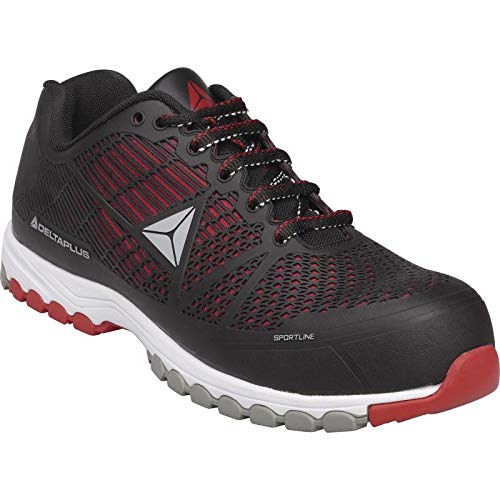

As soon as you choose your perfect pair of S1P shoes, you will be better protected and you will live a better working experience.
What do you think about S1P footwear?
S1P safety shoes. Do you have any points to add?
Leave us a comment below!


